Polski


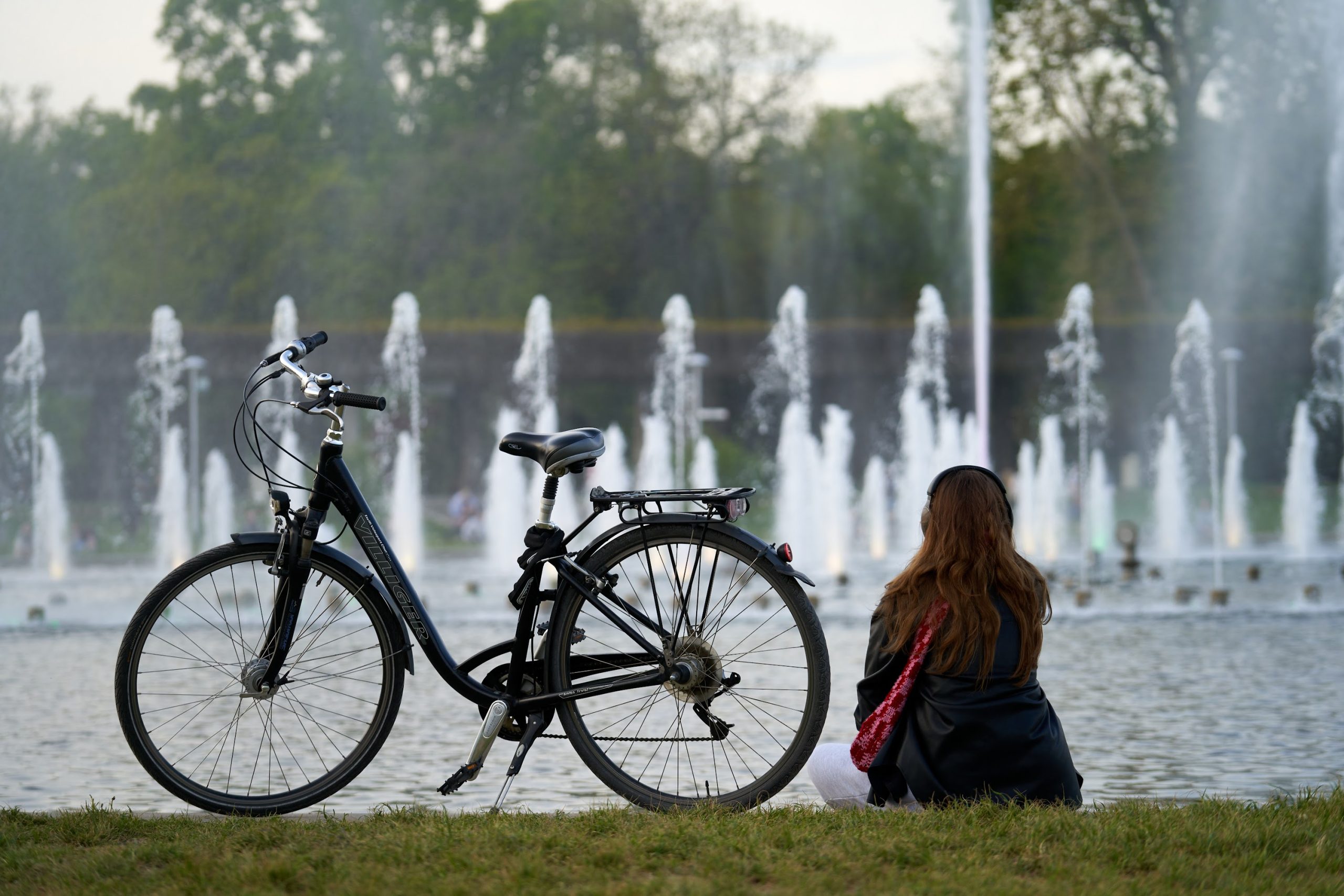
Wrocław is a fantastic city to explore by bike! There are over 1400 km of cyclist-friendly routes, more than 15,000 public bike parking spots, and a thriving Wrocław City Bike system with over 200 stations (besides regular bikes, you can also rent electric bikes, tandems, and family-style cargo bikes). Cycling through Wrocław, you’ll not only see its major attractions but also get to know the city from a different angle and feel its unique atmosphere. Hop on your bike, feel the wind in your hair, and see how beautiful Wrocław is!


Tour
Below you will find quite a few suggestions inspired by this tour. Choose the ones that interest you the most and compose your own itinerary.
Table of contents:
Centennial Hall with Visitor Centre and multimedia fountain
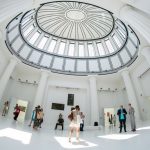
The Centennial Hall (formerly the People’s Hall) is a UNESCO-listed monumental 1913 concrete building designed by Max Berg, and was a real record-breaker more than a century ago: it had the world’s largest dome (65 meters in diameter) and largest organ. It housed five thousand seats.
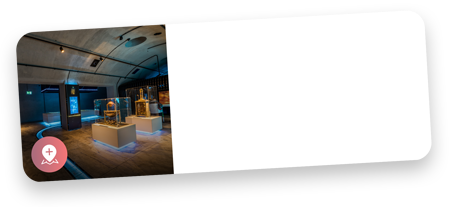
The Visitor Center is a tourist gateway to the Centennial Hall and an interactive, multimedia exhibition that will help you learn all about this remarkable facility. The exhibition consists of touch screens and maps, film and sound recordings, as well as two virtual tours developed with virtual reality technology. During them you will meet the architect of the Centennial Hall himself – Max Berg, take a look at places inaccessible to visitors, and, most exciting of all, soar above the Hall and the Spire to learn about the Centennial Hall complex from a height and see the incredible panorama of Wroclaw.
Next to the Centennial Hall , a multimedia fountain show is held from spring to autumn, which is the largest in Poland and one of the largest of its kind in Europe. The structure occupies an area of nearly one hectare, with light points, three hundred water jets and three fire jets placed at its bottom. The water shows are accompanied by music. The fountain was officially opened on June 4, 2009, on the occasion of the twentieth anniversary of the first free elections in post-war Poland.

Panorama Raclawicka (a branch of the National Museum)
The largest painting in Poland, measuring 15 by 114 meters, the work of Wojciech Kossak and Jan Styka, depicts the victorious battle fought at Raclawice in 1794 between Polish insurgents led by Tadeusz Kosciuszko and Russian troops. The painting is presented in a specially built rotunda, and the space between the canvas and the visitors’ platform is filled with a special staffage, so that the viewer has the impression of being inside the painting, so to speak, and observing the battle from the battlefield.
National Museum
The National Museum’s main exhibition is housed in the neo-Renaissance building of the former Silesian Regency. In addition to an extremely rich collection of Silesian art, you’ll find works by Polish artists from the 17th-19th centuries. A real cultural feast for you will surely be the permanent exhibition “European Art of the 15th-20th Century,” with works such as “Eve” by Lucas Cranach st, “Winter Landscape with Skaters and Bird Trap” by Pieter Bruegel the Younger, “Christ at the Scourging Column” by Francisco de Zurbarán, or Vassily Kandinsky’s work “Evening.” The newest permanent exhibition, called “Miracle-Makers,” includes collections of Middle and Far Eastern art, handicrafts and material culture, as well as contemporary ceramics and art glass. Here you’ll find both the armor of a Japanese samurai and a Louis Vuitton travel trunk, and learn how we came from inkwells and goose pens to the popular BIC pens.
Market
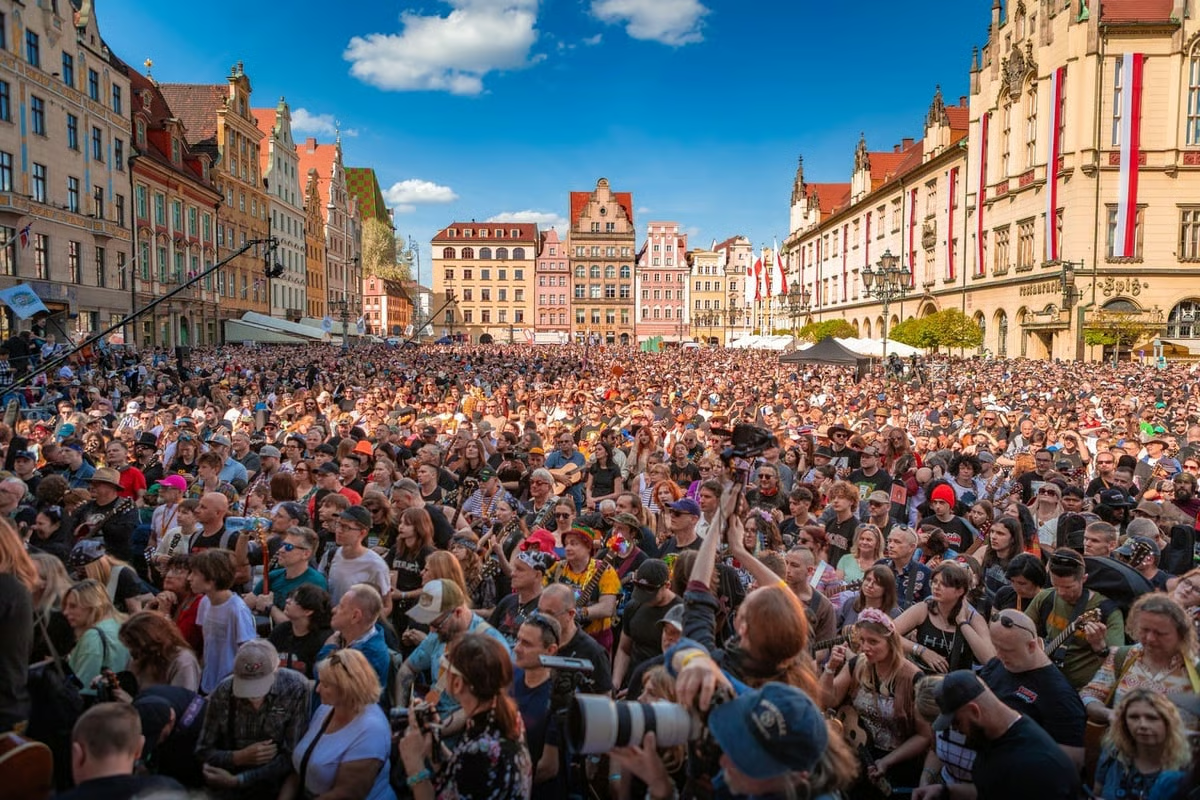
The Wrocław Market Square is one of the largest and most beautiful in Poland. Its boundaries were established in the 13th century. For centuries, it was the most important marketplace in the city. In the center of the square stands the Old Town Hall, a unique Gothic secular monument in Europe, whose construction took about 250 years. It was once the seat of the city’s authorities and courts. In the first half of the 19th century, the New Town Hall was built, and the city authorities moved there. The Old Town Hall now houses the City Museum of Wrocław.
In the Market Square, you’ll find restaurants, cafes, bars, clubs, and pubs – from upscale establishments to places perfect for a quick snack on the go. On hot days, you can relax in the shade of trees near the soothing sound of a fountain.
National Forum of Music
To play a concert at the NFM in Wroclaw, a modern building designed by S. Kurylowicz’s studio, is a distinction and an honor for many musicians, as the largest concert hall with 1,800 seats is known worldwide for its excellent acoustics. You can see the most famous conductors and soloists here during one of the most important musical events in Poland – the Wratislavia Cantans International Festival.
Hydropolis
A unique in the country center of knowledge about water and everything related to it. Here you will learn, among other things, where water originated on Earth, what happens in the sea depths, how waves and snow are formed, and what role water plays in human life. You will see the world’s largest ships (in miniature, of course…), a water printer, an ancient water clock and a bathyscaphe. You will learn about the methods of camouflage used by coral reef inhabitants. Visiting Hydropolis is a great adventure for everyone, as knowledge here is conveyed in a modern way – through interactive exhibitions, multimedia installations, as well as games that will draw in not only children (who wouldn’t want to swim with dolphins…). Hydropolis is housed in a historic 19th century underground drinking water reservoir, which is worth seeing in itself.
Szczytnicki Park, Japanese Garden, and Pergola
Szczytnicki Park is the largest park in Wrocław and an ideal spot for a walk, picnic, or bike ride. It’s an English-style park that was established at the end of the 18th century. Over time, it expanded, and today it covers over 100 hectares. You’ll find charming meadows, perfect for a picnic, and if you’re sightseeing with kids, you’ll definitely appreciate the playgrounds with swings, slides, and sandboxes. This largest park in Wrocław is home to dozens of animal species. You might encounter squirrels, hedgehogs, and even foxes, deer, and martens. One of the park’s landmarks is the wooden Church of St. John Nepomuk. The church, originally built in the first half of the 17th century in Stary Koźle, was later moved to Kędzierzyn and then, in 1913, to Wrocław.
The Japanese Garden has been arranged according to the design rules of traditional oriental gardens. It is a symbol-filled example of the harmonious combination of natural forces and human action. It attracts with its architecture, arrangement and rare plants. Specialists from Japan – landscape architects and gardeners – took part in its construction. Walking through this original garden, you will feel like you are in the Land of Cherry Blossom!
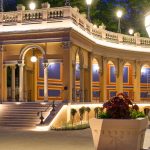
The Pergola was constructed in 1913 based on a design by Hans Poelzig as part of the Centennial Exhibition. The structure is shaped like half an ellipse and consists of 750 columns covered with vines.
Themed Routes
1. Murals Route
This route mostly follows inner-city streets with calm traffic where there is no dedicated cycling infrastructure. Be cautious of other road users and remember the “right of way” rule!
2. Oder River Route
This route primarily follows paths along flood embankments. In many places, runners and walkers also use these paths, so be sure to stay cautious!
3. Forest Tour
Almost the entire route is along bike paths. When heading towards Osobowice, make sure to use the bike path on the right side of the bridge!
4. Krzycka Promenade
This route runs along the embankment of the Wrocław freight bypass railway. It is 7.5 km long, follows an asphalt surface, and a significant part of the route is lit. However, there are still sections awaiting renovation, so make sure you have fenders on your bike!

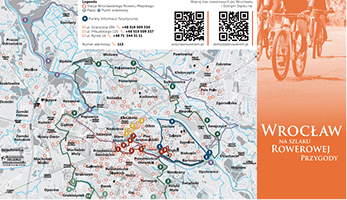
Wrocław's cycling route – download the guide!
For more information about cycling in Wrocław, including the locations of bike repair stations, covered bike parking, and city bike stations, as well as all cycling routes, check out this Wrocław bike infrastructure map:: www.wroclawrowerem.pl.
You can also download our guide, “Wrocław on the Cycling Adventure Trail”.